The large model research controversy: AI goes into everyday life
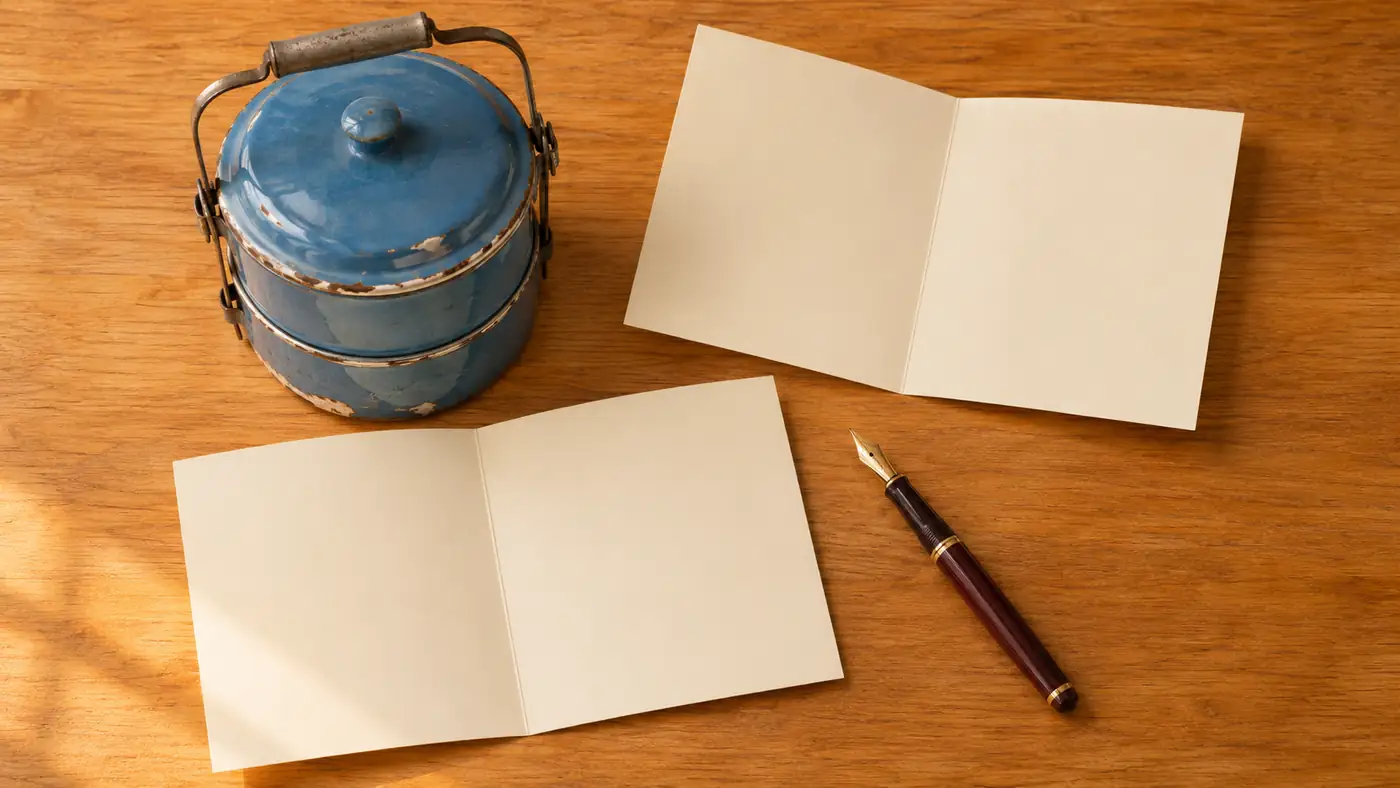
The cover is a fictional situation. The old lunch box is a memory shared by the mother and daughter.
Write a birthday card to my mother, you put on the paper: "Mom, I still use that blue lunch box. I have to take a picture of the cover. You know." I think the three short sentences are too broken, please AI After touching up, I came back and said: "Every time I open the blue lunch box, I will think of your long-term care." Both versions talk about lunch boxes, and my mother may know at a glance who gave it. But if she asks her what sounds like her daughter is standing at the door of the kitchen, she may give another answer.
This card is an example. As for "Is it still like me after touching up", the first layer of answer obtained by the research is: one sentence can be changed smoothly, or you can change your original attitude when changing through smoothly. Writers have the ability to change some of their own habits back. As for whether her mother recognizes it or not, none of the following three studies have asked a recipient like her to do a blind test. If you want to ask her the question, you have to think about it first, whether what she recognizes is a lunch box, a heart, or a person who speaks. Research on Personal Narrative Rewriting · personal writing experiment
What can be changed from the phrase "the lid has to be photographed"
Imagine another kind of polish, change the beginning to "Mom, I still use the blue lunch box, and I have to take a picture of the lid". It merged the broken sentences, leaving behind the small movements that those who used the lunch box knew. Both of the two changes can be handed over a card with no sick sentences, but the first one explains the meaning of this action for the daughter, and the second way is to leave the explanation to the mother. If you really want to check verbatim, you can first ask where the grammar needs to be repaired, and then ask who decides to express the gratitude. There was no standard answer to the latter.
A seemingly trivial change can also be found in the classroom homework. Jim McKinley has taken the assignment of a Master in English teaching program in the UK. The first language of the writer is Chinese, and the English report is submitted. The research selected 25 assignments each in two years, and then picked a paragraph from the ten copies of each session. It is actually twenty clips that are actually sent to polish. The reminder has been explained that the first person is reserved, and the reservation is inaccurate, and the second sentence is still left in Table 2, so you can see it one by one. Research method and table two
One of the students talked about their teaching experience, to the effect that they think that they think reasonable and effective practices, it may not be suitable for another teacher's classroom. The meaning of change has become, and the reasonable and effective practice is different in the classroom of another teacher. Both sentences are very smooth. The original author only needs to testify for the class he has taught, and the revision of the manuscript allows him to make a judgment for another teacher's classroom. Even if the reader has not seen the original author, they can put the two sentences side by side, pointing out that the person who made the judgment has changed, and the evidence required by the sentence has also changed. Table 2, 2019 Sample 2
The sampling method of this study limits the weight of the answer. It is suitable to choose a paragraph with a personal position, which is suitable for finding "what kind of change is worth noting". Although the two sessions used the same homework requirements, different students submitted the manuscript, and 21 of the 25 people who later used the spawn tool to apply for drafting. If you want to know what the tool has moved when it takes over, take this paragraph as a comparison of your own manuscript, which is more direct than the homework of another student six years ago. Even so, the sentences in the table have not been judged by the reader which grammar is better. Sections 3 and 4
Let's take a look at a self-made annotation scene. The students wrote in the classroom observation "I didn't hear how to answer the group in the back row." If the teacher circles the "group" and asks which group to refer to, the student can make up the seat, and the whole sentence will be more clear. If the revision is directly written as "the students in the back row did not respond", the reader may understand it at once, but the next question is what the students have never observed. In the event of such a modification, even if each word is quite similar to what the author usually uses, it is worth returning. First check who sees what is seen, and then talk about whether the sentence has personal characteristics, and even parents can use it when they help their children change a travel journal.
Add a sentence "Keep my tone", how much can you leave behind
Maybe the problem with the birthday card is that the word "touch" is too vague. A reasonable explanation is that the model understands "write a little better" as "write a little more formally", and you can hold it if you explain the requirements. Another explanation is that as long as the whole paragraph is re-written, the tool will carry its commonly used writing method when selecting the next word; even if you know that you want to hold it, you will still repeatedly change some small habits. To distinguish these two explanations, the same batch of originals must be handed over to the same model, and only the modification requirements must be changed.
Tom van Nuenen's preprint made a comparison of 300 personal narratives. The three models receive three types of requirements: general improvement, only rewriting, improvement and retaining sound. The researchers count the visible language characteristics, such as English abbreviated form, first-person pronouns and word length. It is only required to rewrite, and the overall change is still close to the general improvement; after the sound is required to be retained, the abbreviation of many changes will still be lost. If what he cares about is the short story that suddenly stopped, prompt can help, but he has to turn back to the final draft to see if it is left. Section 3, Section 4.3 and Figure 2
The paper also made a pairing question that is easy to be mispronounced. Take out a revision, the algorithm only relies on the characteristics of how to combine letters and other characters, how long the words are average, etc., to choose the closest one from the three hundred originals. In Figure 3, according to the requirements of general improvement, 14.3% of GPT-5.4's revisions have found their own manuscripts, and randomly picking an article is about 0.3%. The denominator is a revision to be paired under this condition. After reading this, think about it, if you ask your mother to do the question, what algorithm can she use without clues? With the lid of the box that has to be photographed, she may match the two versions together. Section 4.4 and Figure 3 C
Conversely also holds. Even if the algorithm can send the revision back to the correct original every time, it may only grasp the specific words of this passage. To identify a person, at least you have to take out another paragraph she wrote to see if the habit of the same person can cross two different things. To identify acquaintances, you have to let readers who are really familiar with her speak. Think of the hit rate of searching the original text as the success rate of mother reading the birthday card, and skip these two steps in the middle. Moreover, these abbreviated forms of English are not even written on one-to-one corresponding Chinese greeting cards.
The most interesting step is to put other people's old works on the table
Connor Baumler and others turned the revision direction upside down. They asked 81 participants to choose six tasks they would write, such as giving thanks to people, greetings to old friends, and preparing to celebrate the occasion. Each person has four randomly assigned conditions for cooperation, and uses his own details to start the draft for the model, and then revise it with his own hands; the other two are written independently by himself. Therefore, in addition to the two texts before and after the change, the researchers also have samples that each person does not rely on the model to write. This answer is "I took the first draft of the machine, how much can I change it back", which is different from the starting point that was handed over to the machine at the beginning. Sections 4 to 5, Appendix Table 9
Study the writing of a text into a set of numbers, and then compare how close the two sets are. The contrast that can most change judgment is on the left of Figure 5. If everyone just deletes the polite words and makes the sentence sound more like what ordinary people say, then it should be useful to use any individual work as a reference. The researcher changed the reference: the same batch of texts that have been changed by hand is closer to the independent works of the reviser, and farther from the independent works of other participants. In this way, there is reason to believe that there is something unique to this person in the revision. Just count how many words you have deleted, you can't see this. Section 6.1 and Figure 5
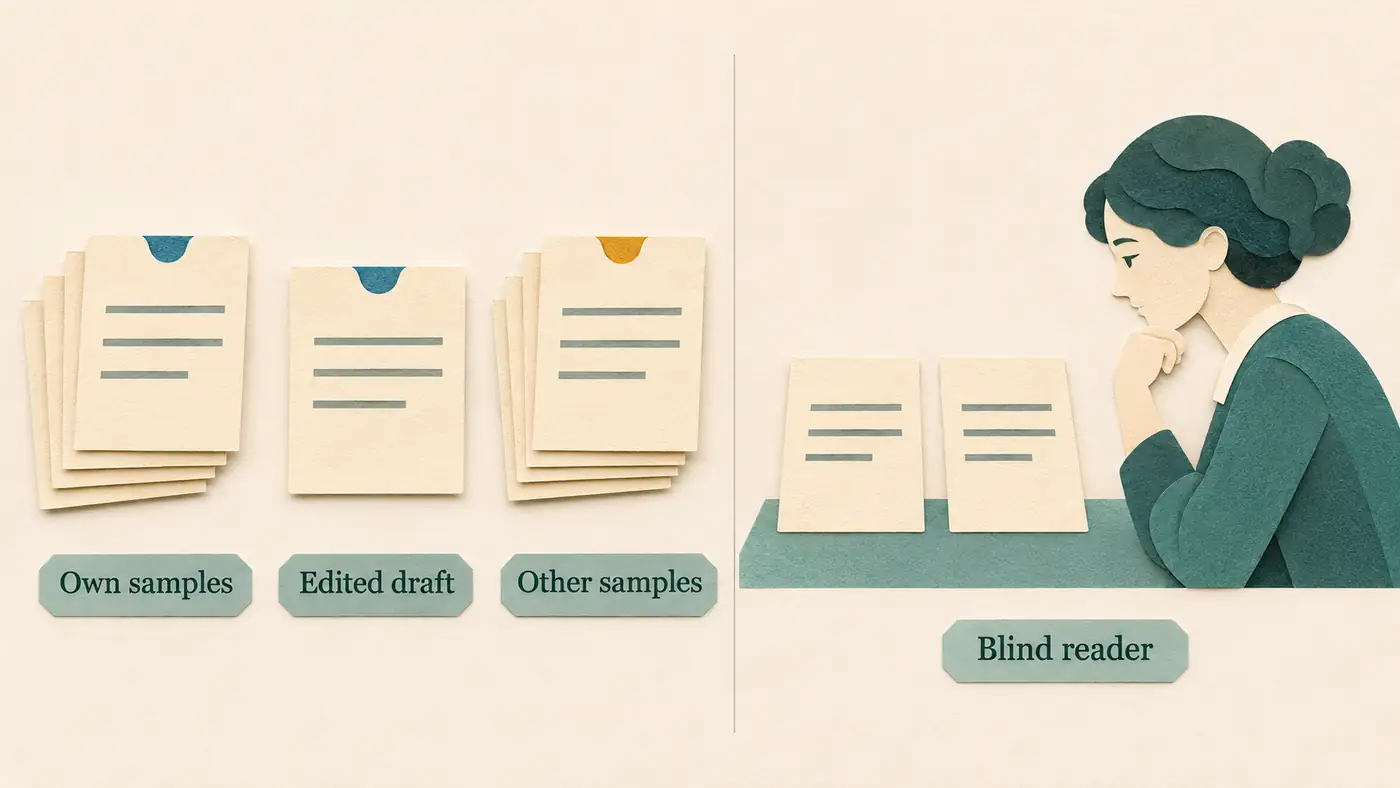
method. References when calculating the similarity on the left are replaced, and the right side indicates how to ask the reader. There are no arrows on both sides, which does not indicate the measured results.
There’s room for a second finding here. When the researchers used model-written text as the reference, the human-edited drafts were, on the whole, closer to the model’s writing and farther from the editors’ independently written work. Imagine putting a family nickname back into a birthday speech while keeping the original draft’s tidy opening and ending. You can tell who added the nickname and still hear someone else’s cadence in the speech as a whole. The distances in the paper track changes across a group of drafts. There’s no threshold at which a draft suddenly counts as your own writing. Section 6.1, Figures 3 to 5
How does the writer feel? The study also asked them to evaluate whether words can represent their own style. In an exploratory comparison, they did not show a difference in the scores of the manuscripts and independent drafts that were revised by hand. This leaves another layer of meaning for "like me": I am willing to take this sentence as my own expression. Those who make judgments here know what choices they have made, and also remember why they chose this detail. The recipient will only see the version sent to the hand. The researcher left the space of the recipient specifically in the limited section. Section 6.3 Figure 7 and Section 8
Before handing the card to the reader
If you happen to have a text that you want to polish, you can make the following small comparison. It is unenforced recommendations. Keep the original manuscript, save the colored draft, first circle a really repaired language problem, and then circle a place where you can write that, but at that time, you chose another way of saying it. In particular, pay attention to the words you grasp, the address of the recipient, and the sentence that you have thought about whether to say it or not, and finally decide to save it. If you can't find a really well-resolved language problem on the two sheets of paper, you can also leave it honestly.
Then ask someone who has read your old work to help you. The two versions are arranged in the same font, take out the signature, and disrupt the order. First, just ask "Which one is stuck when it is read", and ask the other party to make a position. Ask again, "Which sentence is more like what I usually say, which word do you hear it from?" Write down the reason first and then reveal which version has been polished. If the other party says, "Only you have that lunch box", this answer can prove that the story is recognized; if you say "After you explain the matter, you will add a sentence 'You know'", and you will give you a wording clue that you can check the old letter. If the two versions are very similar, or you can't hear it just by this word, you can also write it down as it is.
Another day, choose a small incident neither of you has discussed. Give the reader a few similar pieces you’ve written on your own, then show them the new, anonymous passage. Keep emails to your adviser separate from texts to your family, or the reader may simply pick the least formal passage. To test whether polishing makes authors harder to recognize, include other people’s writing on the same subject. Have different readers see either the originals or the revisions and record whom they mistake for whom. Asking a mother to pick between two cards her daughter wrote can tell you which she prefers. It can’t give you an author-identification accuracy rate.
After the version is announced, you can also ask this reader to draw again. If she was initially circled as a sentence "very like you", and after knowing the tool, she was crossed out, and it would be more interesting to keep the mark twice than to wipe it off the first time. The first time she could rely on the words in front of her, and the second time she also knew something about the writing process. However, reading the same paragraph one after another may also make her think of an explanation. With these two drawing lines alone, it is impossible to calculate the impact of the use of the disclosure tool. For the card writer, what can really take away is the specific reasons she gave and whether you agree with that.
When you decide which one to send at the end, you can temporarily cover "what you know", read it again, and then put it back and read it again. These words did not provide new facts, but left the position of the call to the person on the opposite side who also took the lid of the box. If this is exactly where you want to leave her, there is a reason to keep this sentence. As for whether others can recognize you with this sentence, the reason why he will listen to him after reading it is more honest than guessing a score for him.
References
- Jim McKinley, 2026, Digital Studies in Language and Literature official journal paper. Beyond Polishing: The Compounding Dynamic of GenAI in Academic Writing
- Tom van Nuenen, 2026, arXiv preprint, this article checks v1. Voice Under Revision: Large Language Models and the Normalization of Personal Narrative
- Connor Baumler, Calvin Bao, Huy Nghiem, Xinchen Yang, Marine Carpuat, and Hal Daumé III (2026). Long paper in the ACL main conference. Can You Make It Sound Like You? Post-Editing LLM-Generated Text for Personal Style
Apps by the author
I also build small tools for everyday life. Here are two of my apps:
- Daily Expense Journal: Track your income and spending, plan a budget and set savings goals. View on the App Store.
- One Small Action: Pick a small action that fits the time and energy you have today, then record how it felt and what you noticed. View on the App Store.
Find more articles and projects on my website: zffjzz.top. I’d love to hear how the apps work for you and what I could improve.