The large model research controversy: AI goes into everyday life
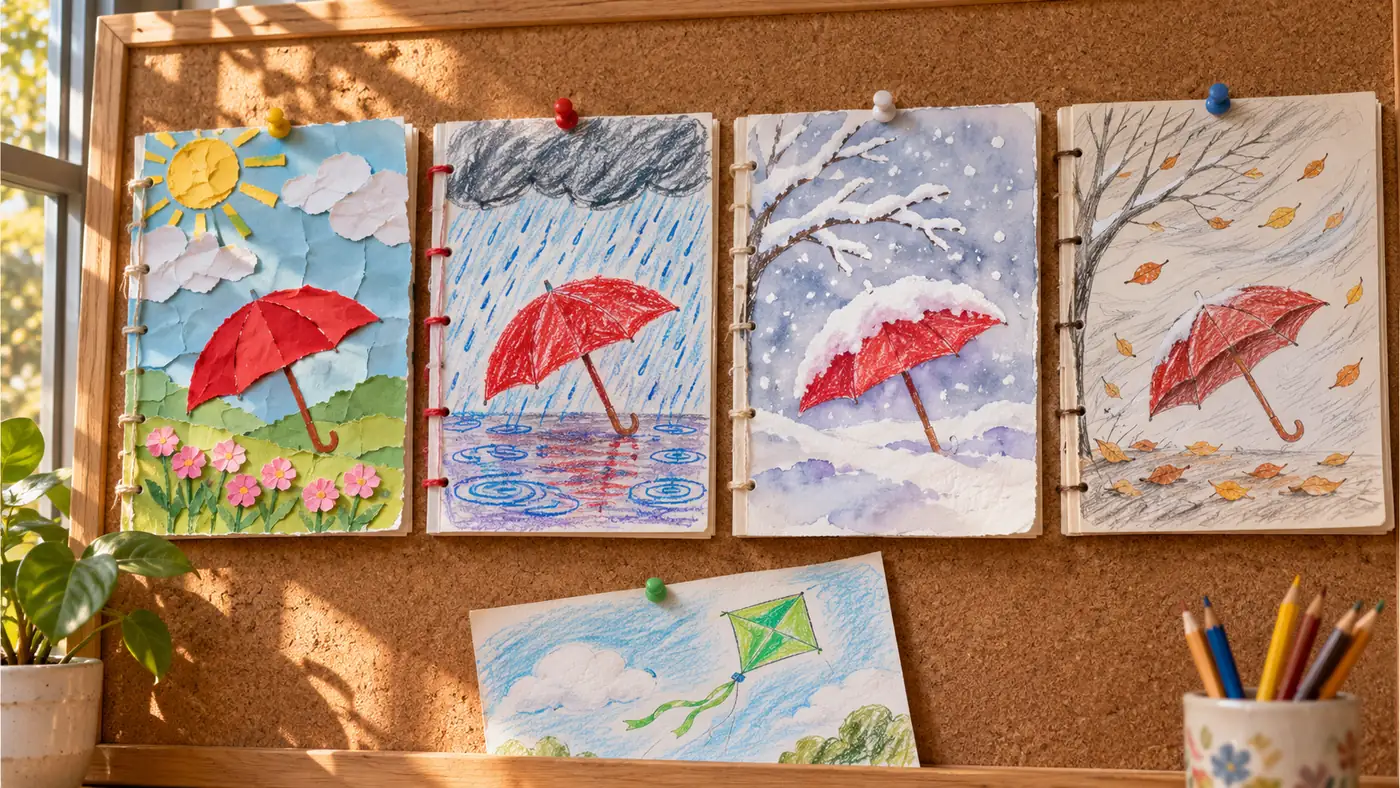
Cover sign: The same red umbrella can draw four kinds of weather. Illustrations are fictional class covers.
Suppose the class magazine collects rainy days stories. The first article wrote that the child was waiting for his father at the station, and a red umbrella crossed the crowd, and finally stopped on the head of a stranger. In the second article, I wrote that my grandmother was looking for the lost red umbrella along the street, and recognized the cloth strip sewn on the umbrella handle. The editor likes these two very much. When she turned to the fifth chapter, she wrote a stroke in the blank of the catalog: "Is there anyone else writing about the rain stop?" For the child who submits the manuscript, there is a story worth reading is enough. For those who want to complete the entire period, they have to see how many places these stories can take readers to.
If several students have asked AI to recommend the beginning, the two judgments can be established at the same time: a person who was originally stuck, after borrowing the idea, wrote a better story; But when I saw a few red umbrellas, I couldn't guess who brought them in. I just learned a text borrowing an umbrella last week. The teacher said about the umbrella when giving an example, or everyone really met the same person on the day after school, and it all made sense. If you know what AI is playing here, at least you have to see what the author who got the same question and did not receive the AI suggestion.
Read six articles to a person, and spread all the manuscripts
Doshi and Hauser have done an experiment that is much like a class journal call for papers. Participants in the UK online platform draw a topic in the sea, jungle or alien adventure, and write eight sentences to young readers in English. Some people write independently, some people can ask GPT-4 a three-sentence story idea, and some people can ask for up to five. In addition to the question, this button is the condition for the researcher to randomly change. In the end, there are two hundred and ninety-three chapters that enter the analysis, and the one-to-one correspondence between people and stories. The so-called "write for young readers" means that the age of the target reader cannot be regarded as a middle school student accordingly. Original figure 1 and writing method
The following method of reading is very important. The other 600 readers who recruited each other read six articles, read one article at a time, first comment on projects such as novelty, and then contact whether the author has used AI information. The reader can find a certain ending very unexpected, even if ten readers have met a similar ending in other stories. Based on the independent writing group, there are up to five ideas, and the novelty score of the work is about 8.1% higher on average. This is a change in the relative benchmark mean of the score; the experiment does not record how many people in a class have stepped into "excellent". And it is always people who really write, and this result is counted in the story that people write with suggestions. Original figure 2 Comparison with the reference group
To answer the small editor's question, the researchers exchanged the same batch of manuscripts in a different way. They encode each story into a string of contents, take out one of them, find the average representation of the rest of the stories under the same writing conditions, and see how close this article is to that average. Both groups that can be thought-provoking are closer to their respective centers than independent writing groups. The center can be understood as the common tendency of many manuscripts, and no classmate has really written that "average story". This practice will not tell you whether the two of them copied a sentence, let alone identify which article should be withdrawn from the class magazine. Original figure 4 and similarity calculation
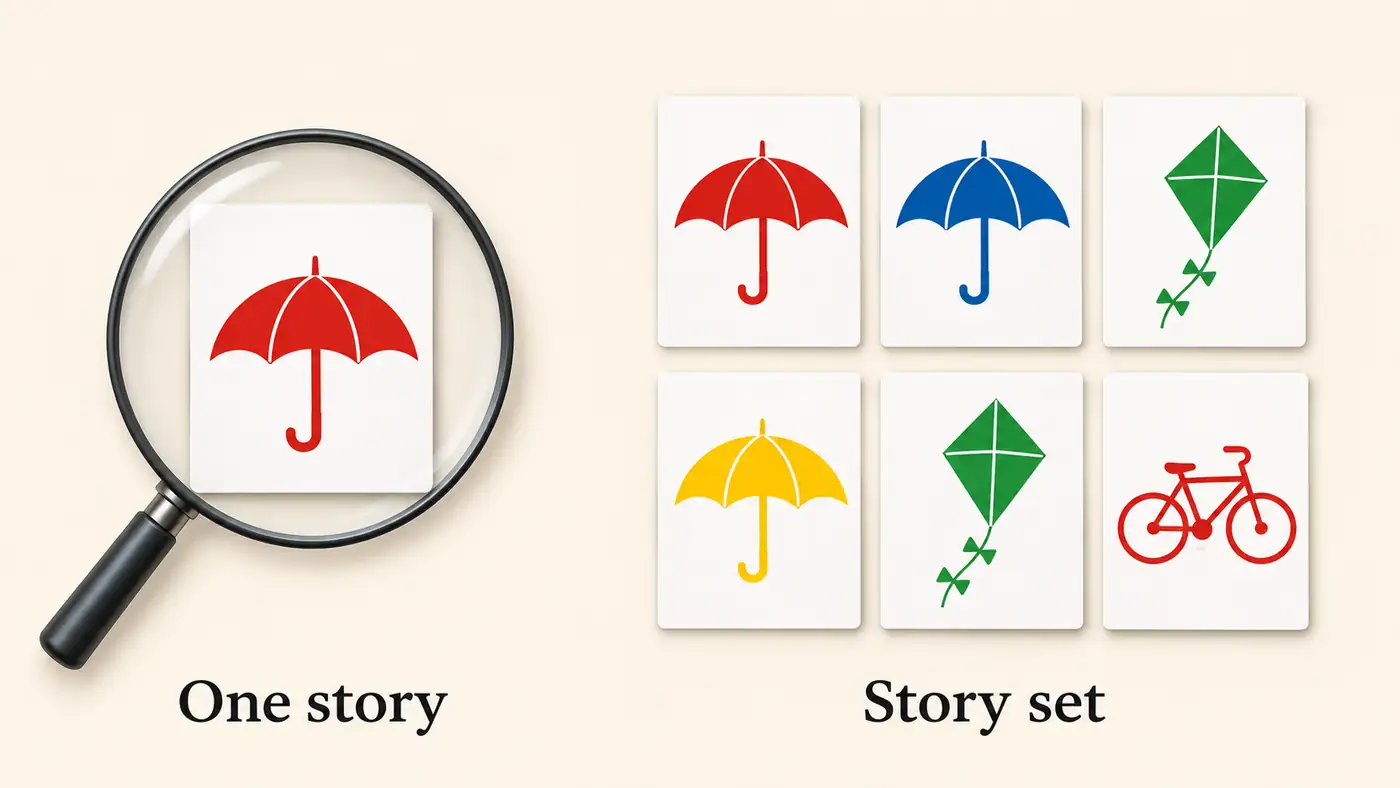
Methods: On the left, you can ask how the single article is read, and on the right, you can ask what ideas this group covers. The two columns are juxtaposed, and there is no process arrow; the number, color and position of the card do not represent the paper data.
Can you ask for a few more ideas, why is it still close?
Think about the button that can be clicked up to five times. For those who have waited for a long time and haven't written the first sentence, they see a feasible beginning, and finally there is something to choose from. Those who have already done the belly draft may close the window after reading the suggestion. Before writing, the researcher asks the participants to list the words that are far apart as much as possible, and then see what the performance of this association task is related to the improvement of the rating. At first, for those with lower scores, the improvement of the work score from the recommendations is more obvious. A small test before writing only provides the starting point of this task; parents cannot judge which child "lacks creativity". Original picture 3
There is another possible way. As long as the starting point is specific enough to be written directly, people have a reason to go on. Change the original "rain" on the paper to "with a ticket between the umbrella bone", and the next sentence is easy to ask who the ticket is. Even if the color and destination of the tickets received by each person are different, the owner, clues, and reunion may still enter several manuscripts together. This paragraph is an example. The paper has done a more restrained inspection: for those who have called for suggestions, compare the finished draft with the ideas he saw first; for those who do not have suggestions, add an idea received by others in the same topic. The two groups of suggestions can be called, and the similarity between the story and the matching idea is higher. This result adds a weight to the explanation of "leave a trace at the starting point", and the author himself still can't distinguish whether it is out of recognition, in a hurry, and can't think of other directions. Original figure 4 and its description
It is especially worth noting the word "up to". The group that can be five times is only 2.55 times on average. The random allocation is how many opportunities the interface gives, and the actual number of points is determined by the author himself. Compare the person who is full with the person who only clicks once, and may just pick the author who has hesitated for a longer time or is more willing to try it into the previous group. The paper cannot push out "everytime you ask, the work is a little better", and you can't push every author to receive the same idea. The research uses the unified question method to generate suggestions. When students can write the breakfast truck downstairs, the starting point has changed. Original results and discussion
You can also use AI, just change who wants the first step
There is a more daily choice than "use or not". You think of a metaphor but can't tell what good it is, you can ask AI to explain it to you; you can also let it list a few when there is no metaphor. Dong and Yakura took these two things apart and recruited 644 native or non-native speakers in a pre-registration study, each facing four situations. One of the situations is to recall one of the most boring lessons, using metaphors to express the feeling of sitting there. Some people write the whole process by themselves, some people can get metaphors and explanations from the beginning, and some people have to hand over their own metaphors before receiving suggestions for the explanations. The words that are finally imported and compared are all in English. Author preprint, Figure 1 and method
Cutting this work along the "metaphor" and "interpretation" will get two ways of reading. The researchers first only compare the metaphors themselves. In the same situation, the works proposed by AI are more concentrated; the group that first thinks of the metaphor, and the independent writing group, does not detect a clear difference. Then I also put back the later explanation, and the group that people wanted to compare first seemed more concentrated. The reader is obviously in the same batch of homework, the selected text is slightly different, and the judgment that can be supported has changed. The previous result cannot prove that the two groups are exactly the same, and this report is still a preprint. Author's preprint, Figure 2, Supplementary Figure S1 and Table S1
Take a fictional example. One person said that a boring class is like waiting for a pot of water that cannot be turned on, and the other said that it is like sitting in a car that stops at every stop but no one gets on and off. These are two associations with their own life traces. If the two explanations end with "the time is infinitely elongated, and every minute is extraordinarily long", you will feel the same when you look at the whole paragraph. Conversely, the same pot of water is depicted as an elegant and playful, and the tone has changed, and it may not necessarily add a new clue to the editor. Before commenting on "very similar to others", it is best to point out where the image is.
An article can span several types, but a stack may always be those kinds
Eight sentences are short after all. If you give the author a thousand English words, leaving room for paving and reversal, is the problem still there? Two hundred and eighty-five students participated in the classroom study of Hosanagar and Ahn. Writing independently on the first day, writing another story on the second day, randomly using one of three ways of collaboration. Some people ask AI to write from the idea and outline all the way to the revision, and they are responsible for confirming or requesting changes. The most worthy of comparison here is the three divisions of labor on the second day. The direct subtraction of the second day and the first day will also be included in the impact of one more day of practice and the sequence of success. Published paper; Author's manuscript method and figure 4
The researchers allow a story to have multiple types of tags at the same time, and then see how similar the label combination of the manuscripts in the same group is. When people are mainly responsible for confirmation, there can be more types in a single article, but the type combination of the whole group is closer. This phenomenon is not difficult to imagine: if each child has written "sci-fi plus suspense", each article is different, and the whole class can only provide one kind of match. The author also compares the semantic and type tags of the full text, respectively. When the outline is set by the person first, the similarity of the type combination is close to the benchmark of independent writing, and the full text can still be more similar. A directory counted by type, there are many ways to write sentences and twists that cannot answer the story. Author draft 4B, 4C
This also draws an edge for the word "good". If the teacher arranges the same question and imitates the same question, everyone writes the same turning point more proficiently, which is exactly the purpose of the practice. If you are collecting a one-act drama for the school celebration, the editor has already had three dramas that rely on misunderstandings. Even if the dialogue is wonderful, it may still not be ranked. There is nothing left to choose whether to choose or not to choose this whole program, and there is no need to deduct points for the author in reverse. The above research can help us see how the distribution of works under a certain division of labor changes. No one has followed this group of children for a semester, and then asked them to turn off the tools and write a brand new story. The few red umbrellas in today's catalog can't answer for next year's children.
When cataloging, leave an extra line of blank space
There is a self-examination that you don't need to run the model, you can try it next time you receive a few of the same inscriptions. This practice is a suggestion to the reader, and this article does not actually implement it. First cover the signature and tool records, and mark one of the most worthy details one by one. Take another piece of paper, and only leave one sentence in each article that can explain the outline of "whoever encounters any trouble and what is done", and try to use the author's verb. After reading the complete stack, put together the outlook that can replace each other with another name. If the two minor editors have different division methods, they just ask them to choose a pair of drafts to explain the reasons: do they all write umbrellas, or do they all rely on picking up lost and property to promote the plot? Both divisions make sense, but serve different draft purposes.
There is also a situation that is easy to miss: the editor usually only read a few masterpieces selected by the teacher. If the teacher especially likes to reveal the answer to the last sentence, the selected story is likely to be reversed. Just relying on the selected drafts, there is no way to know how similar the manuscripts submitted at the beginning are. When doing this exercise, keep a few unselected works, or simply use a lottery to decide which ones to get. In this way, even if no classmate is willing to say that he uses useless tools, the editor still has a question that can be answered honestly.
Now look at that blank line. Take away the red umbrella: if the stories still have someone waiting, someone recognizing a familiar object, someone sheltering from the rain, and someone choosing to get soaked, the contents are livelier than the cover suggests. If several stories are left with the same twist, ask their writers, “What other ending did you have in mind?” Anyone who wants to keep going can jot down that ending, then ask AI where the story stops making sense. Save the note for the next editing session so you can see which idea came first and which emerged in conversation. That won’t measure the influence on the whole class, but it turns “write something original” into a question a writer can actually pick up and work with.
References
- Anil R. Doshi, Oliver P. Hauser (2024), Generative AI Enhances Individual Creativity But Reduces the Collective Diversity of Novel Content, published in Science Advances. Full text of the journal
- Mengchen Dong and Hiromu Yakura (2026), “Human diversity fuels collective creativity that large language models cannot simulate or sustain,” July arXiv preprint. Original manuscript
- Kartik Hosanagar, Daehwan Ahn (2026), Designing Human and Generative Ai Collaboration: Trade-offs in Productivity, Satisfaction, and Creative Diversity, published in PNAS Nexus. Details of the figure number and method above are according to the author draft V2 in 2025. journal record; Full text from the authors
Apps by the author
I also build small tools for everyday life. Here are two of my apps:
- Daily Expense Journal: Track your income and spending, plan a budget and set savings goals. View on the App Store.
- One Small Action: Pick a small action that fits the time and energy you have today, then record how it felt and what you noticed. View on the App Store.
Find more articles and projects on my website: zffjzz.top. I’d love to hear how the apps work for you and what I could improve.