AI Frontier Observation · Interpretation Date: November 6, 2026 · Data Deadline: Beijing Time 20:29:42
On November 5, the independent evaluator METR published an unusual study. From August 12 to October 29, its evaluators examined Anthropic’s internal material to ask a question that calls for a view inside the research process: when researchers use the very models they are developing, how much faster does the next generation improve? On a set of internal capability measures, the past year’s progress was equivalent to nearly two years at the earlier pace. The evaluators offered a judgment on how much credit AI should receive and explained why that judgment is difficult for the public to check. METR Master Report
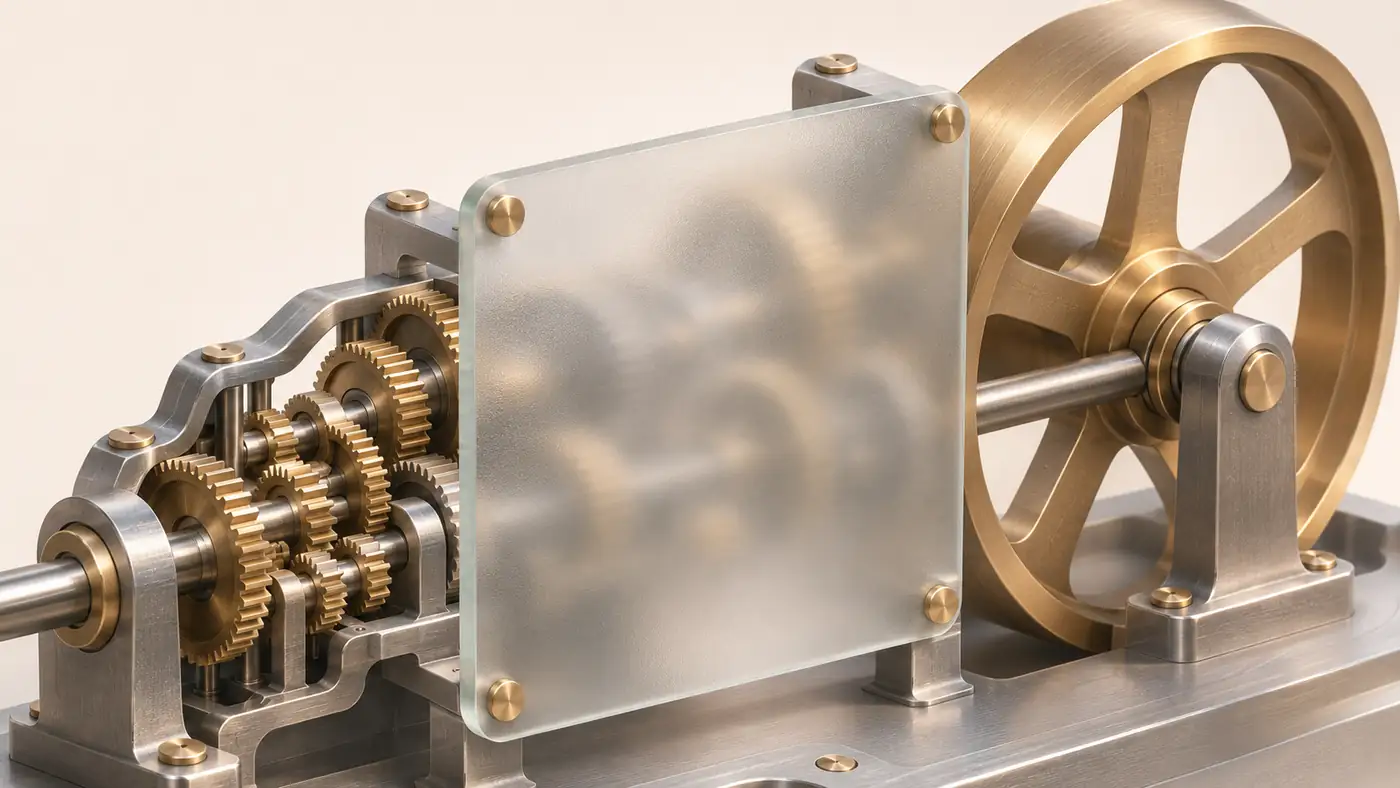
Original schematic. Both ends can be observed, and only a part of the transmission relationship in the middle is exposed.
1.9 times the denominator
METR uses AECI, that is, Anthropic, a comprehensive indicator constructed based on the Epoch capability index. It converts the scores on different tasks to the same ruler, and then examines how far the models of the past dynasties are advancing on this ruler. When the researcher labels each model version, the majority of employees can use the time they use. This is especially important for the R&D ecosystem: a model that has not been released to the public but has helped engineers write code for several weeks.
The researchers assumed a single turning point and let the data locate it. The main analysis placed it on October 7, 2025. The annual growth slope after that date was 1.9 times the earlier slope, with a 95% confidence interval of 1.5 to 2.8 times. This compares the index’s average annual increase across two periods. Questions answered correctly by one model, time spent on one training run, and projects completed per employee per year all have different denominators. The interval accounts for uncertainty in each model’s index score. It leaves out uncertainty about which models to include in the fit. Appendix to Main Report Methods
The same grade table also allows different interpretations. If there are a few particularly difficult questions left in a test, the ability to answer the last few questions may be very large. Conversely, if there are many questions that can be answered by guessing correctly, the same difference has another meaning. METR changes the assumption of the difficulty distribution of the problem, the estimated speed of the speed-up point is 1.1 times to 2.9 times, and several settings are similar to the fit of the existing data. Readers who care about trends can see that the direction is generally the same. This difference is very important to judge whether to cross a threshold that is just set at twice the threshold. Main report sensitivity analysis
12 times what employees say, measure is another thing
In the internal Slack voting, employees who use the October strongest internal model are self-reported to achieve an average of about 12 times. This figure comes from the voluntary response of the voluntary response, which does not cover each researcher, nor does it time item by item. The more fundamental problem is that even if everyone can time accurately, they may have done another group of jobs when they have an assistant. Main Report Interview and Survey Met Analysis of Task Selection
Take a hypothetical example. A graduate student originally only wrote a script for a control experiment. With an assistant, he can write ten variants in the afternoon. If he was asked to estimate how long it would take to write these ten scripts in his barehands, he would give a high multiplier. But he didn't write about the ten variants at all, and maybe only one of them can distinguish the two competitive explanations. To measure the value of the output, you have to ask whether the additional experiments have changed the next decision. On the other hand, just give him the original time, and he will miss the good idea that he can afford it now and give up in the past. This explains why a sincere personal estimate is also difficult to directly convert to the annual progress of the laboratory.
How many of the ability progress come from assistants?
Met is quite sure about an alternative explanation: the size of the training computing power alone is growing faster, and the observed acceleration cannot be explained. The evaluators comprehensively interviewed and other internal evidences, judging that by October 2026, AI is likely to contribute a large part of the speeding up at that time. For the end of 2025, they believe that the impact of other factors is likely to be greater. This is the attribution of the evaluators to a specific period, and there is no control trajectory in the public material that allows the same laboratory to deactivate the AI under the same conditions. Main Report Attribution and Deletion Notes
The public can check how the two section slopes are calculated, but it is difficult to check the cause and effect interpretation in the same way. Anthropic has a unilateral right to abstain from non-public information. The estimation of the progress of the algorithm, the attribution details of some input data and training links, the evaluator has seen it, and the readers cannot see it in the public version. This also explains the wording of another document on the same day: when reviewing the Anthropic August risk report, the same group of assessors tended to believe that as of July 15, it had not crossed the early warning line, but believed that the crossing line was also a reasonable possibility. The early warning judgment in July and the trend estimate in October have their own time windows, and the two documents are only from one evaluation work. August Risk Report Review
What the next model can test
This study gives an expectation that can be tested forward. If the indicators, version sampling rules and fitting methods are fixed first, and then the subsequent generations of models are used to test the trend, we can observe whether the turning point found this time can predict the data that has not been seen before. Attribution requires another type of record: which experiments are raised by the assistant, which results are reworked after discovering the problem, and whether these experiments will eventually affect the training decision. The success and failure cases summarized by stage in public are more helpful than making another personal effect voting, even if the details of the model are hidden, it can help the reader to judge where the time and save go.
As far as the existing evidence, I will take "Anthropic may progress faster on the task of clearly scoring" as a judgment with data support, and leave "this acceleration will continue to amplify with the next generation of assistants" as a prediction. What is especially worth waiting for is a paired result: whether the follow-up ability indicators can maintain the slope, and whether the R&D link that was originally promoted by people can continue to be shortened. If the two appear in the same period, it is more worth asking how strong the feedback AI is participating in its own research and development.
References
- METR's October assessment of the speed of Anthropic research and development, including method and sensitivity analysis
- METR Review of Automation R&D Section in Anthropic's August Risk Report
- Analysis of Tom Cunningham and Parker Whitfill on task replacement and efficiency improvement caliber
Apps by the author
I also build small tools for everyday life. Here are two of my apps:
- Daily Expense Journal: Track your income and spending, plan a budget and set savings goals. View on the App Store.
- One Small Action: Pick a small action that fits the time and energy you have today, then record how it felt and what you noticed. View on the App Store.
Find more articles and projects on my website: zffjzz.top. I’d love to hear how the apps work for you and what I could improve.