系列:AI 论文精读与复现训练营
日期:2026-08-12
适合读者:研究生、机制可解释性入门研究者、有工程背景的 AI 读者
检索日期:2026-08-12
摘要
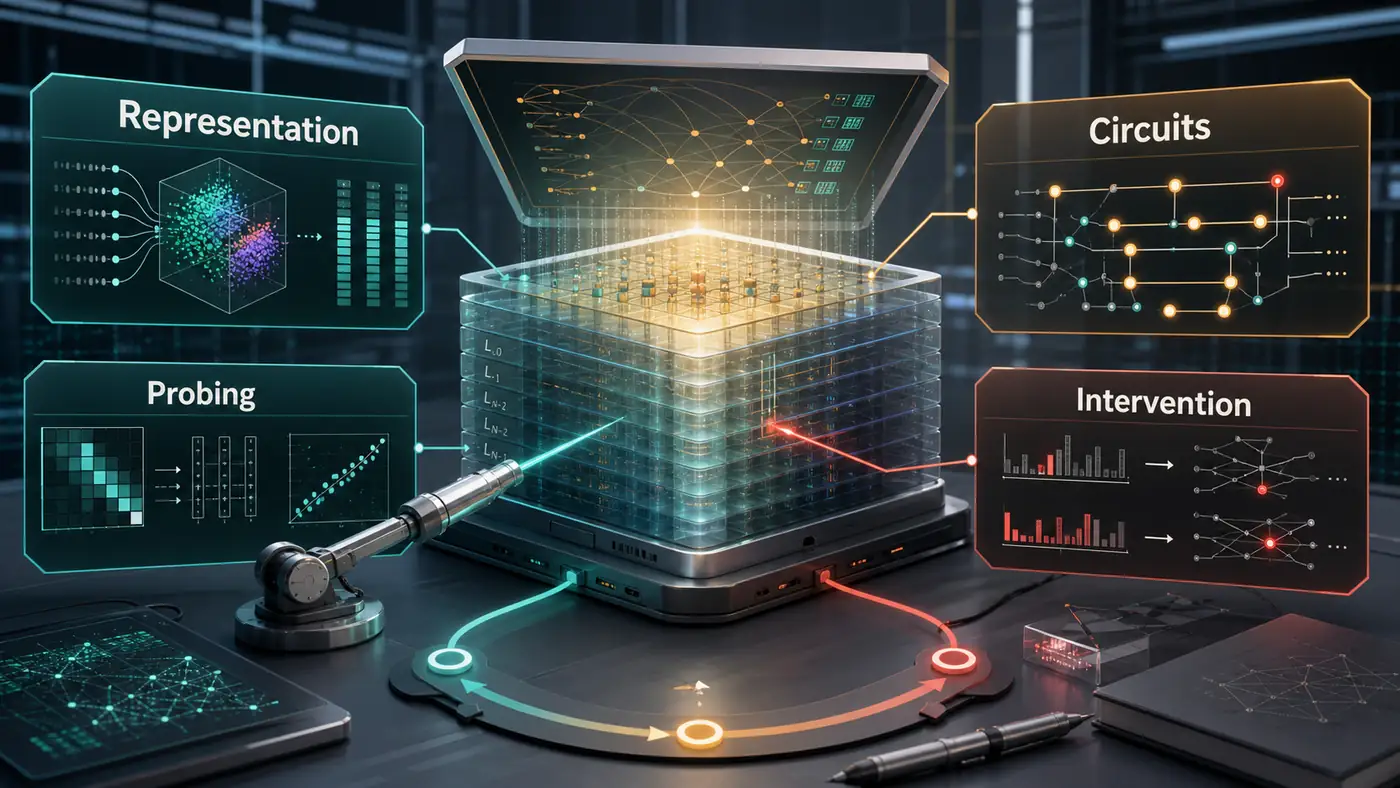
Interpretability,尤其是 mechanistic interpretability,已经从“给模型输出配一张热力图”逐渐变成一套围绕内部表示、因果干预和可复现实验组织起来的研究方法。读这条线不能只问“这个神经元是什么意思”,而要问:模型内部有哪些表征单元?这些单元是否稳定?它们是否真的参与了输出?如果我 patch、ablate 或 steer 它,模型行为是否按机制假设变化?
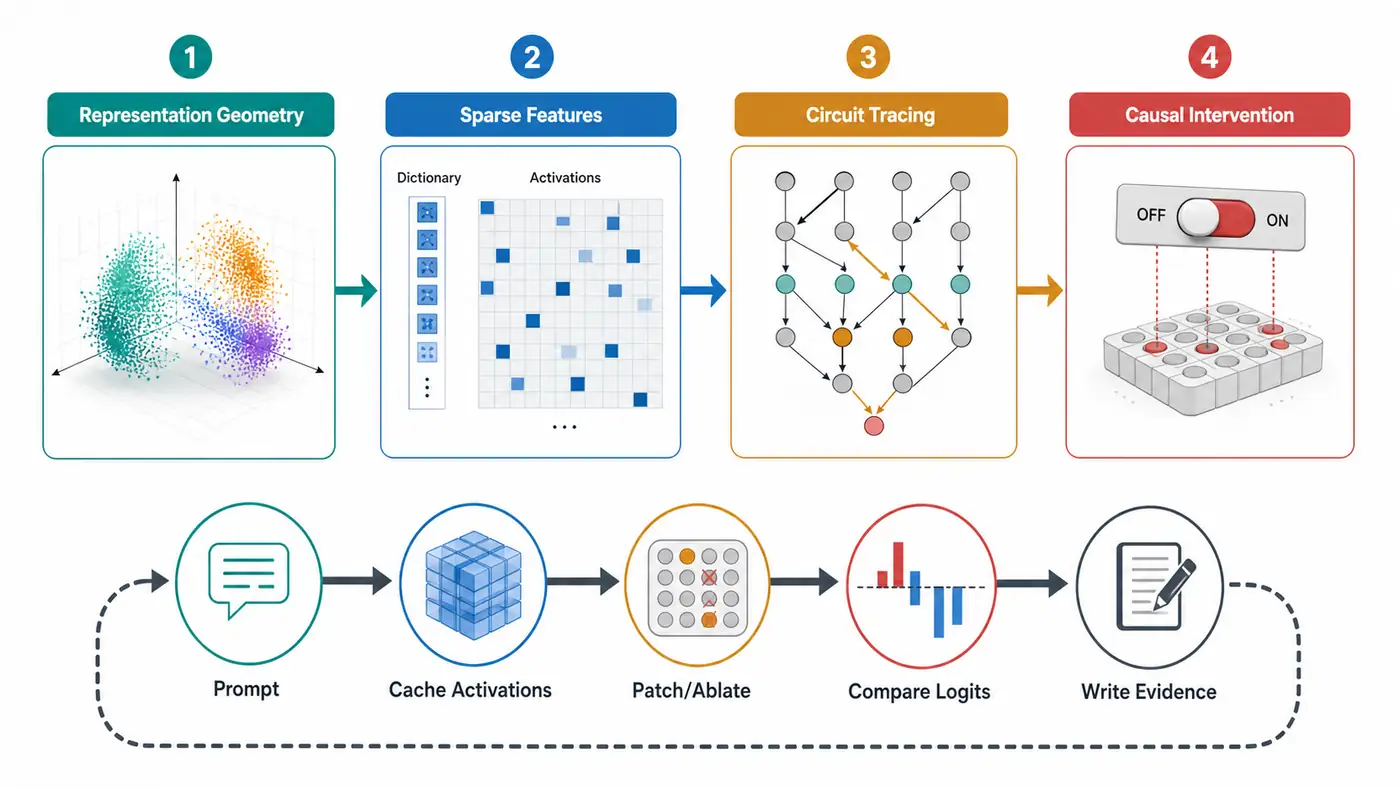
这篇文章给出一条适合科研训练的论文精读路线:先读 representation 和 probing,理解“信息是否可读出”;再读 circuits,理解“组件如何组合成算法”;然后读 sparse features / SAE,理解“为什么单个神经元不够、为什么特征也会失效”;最后读 causal intervention、circuit tracing、Jacobian Lens 和 Natural Language Autoencoders,训练自己把解释从相关性证据推进到机制证据。
为什么这个主题重要
大模型越强,外部行为越容易被提示词、评测集和采样设置掩盖。一个模型答对了数学题,不等于它真的按可追踪的中间步骤推理;一个模型拒绝有害请求,不等于内部没有先识别、计划或压制某些内容;一个 SAE feature 看起来有清晰语义,也不等于它是模型实际使用的唯一因果变量。
2024 到 2026 年的进展让这个方向变得更具体。OpenAI 发布了 GPT-4 表征的超大规模 sparse autoencoder 研究;Anthropic 从 Claude 3 Sonnet 的 monosemantic features 推进到 2025 年的 attribution graph / circuit tracing,再到 2026 年的 Jacobian Lens、J-space 和 Natural Language Autoencoders;Google DeepMind 的 Gemma Scope 与 Gemma Scope 2 把开放模型上的 SAE、transcoder 和交互式分析资源推给社区。与此同时,NeurIPS 2025 的 SAEBench、feature absorption、feature explanation falsification 等工作也提醒我们:解释工具本身也需要 benchmark、反例和可证伪评价。
因此,interpretability 论文的读法要比普通方法论文更苛刻。它不是“提出一个指标,跑几个模型”,而是试图回答“模型内部到底发生了什么”。这类结论如果没有 intervention、negative control、跨 prompt 复现和工具失效分析,很容易停留在漂亮可视化。
核心阅读方法
读 interpretability 论文时,建议把每篇文章拆成五个问题。
第一,解释对象是什么?是 token embedding、residual stream、attention head、MLP neuron、SAE latent、transcoder feature,还是 Jacobian lens 读出的 verbalizable representation?对象不同,证据含义完全不同。一个 probe 读出语法信息,只说明表示中含有可线性提取的信息;一个 ablation 改变输出,才开始接近“这部分计算被模型使用”。
第二,解释目标是什么?论文是在解释特定行为、特定数据分布、某一类能力、某个安全相关倾向,还是模型的一般表征空间?解释 induction head 与解释 Claude 的 evaluation awareness 不是同一层任务,不能用同一种证据标准。
第三,证据是相关性、可预测性,还是因果性?可视化激活最高样本是相关性;linear probe 是可读出性;activation patching、path patching、ablation、feature steering、model editing 才是更强的因果证据。最好的论文通常会把这些证据串起来,而不是只展示一个漂亮案例。
第四,解释工具有没有自我校验?SAE 要检查 reconstruction loss、sparsity、feature consistency、dead features、feature splitting、absorption 和解释可证伪性;circuit tracing 要检查 replacement model 近似误差;probe 要控制 probe 容量;Jacobian Lens 要记住它是平均线性化工具,不是完整读取模型全部思维。
第五,复现边界在哪里?机制可解释性很适合小模型训练,但很容易在工程上失控。研究生更适合从 GPT-2 small、Pythia、Gemma 小模型、公开 SAE、TransformerLens、NNsight、Neuronpedia 和 circuit-tracer 之类工具开始,先复现一个小行为,再扩展到一个稳定问题。
代表论文路线图
1. Representation 与 probing:先学会区分“可读出”和“被使用”
入门可以从 probing literature 开始。Belinkov 的综述很适合建立基本警觉:训练一个分类器从 hidden states 预测语言属性,不能直接证明模型在下游任务中使用了这个属性。probe 太强会自己学任务,probe 太弱又可能漏掉真实信息。
这一阶段要掌握三个动作:选层、选位置、选 probe 容量。读论文时不要只看 probe accuracy,而要看 control task、selectivity、minimum description length、跨模型比较和干预验证。一个好的 probing 实验应该能告诉你“哪一层、哪个位置、用多复杂的读出器,可以提取什么信息”,但它通常还不能告诉你“这个信息是否驱动输出”。
把 probing 读扎实之后,再读 logit lens、tuned lens 和 Jacobian Lens 会更清楚。它们本质上都在问:中间层表示能否被映射到人类可读的词表或语义空间。2026 年的 J-space 工作重要之处不只是提出一个 lens,而是把“可 verbalize 的表示”与 report、modulation、internal reasoning、flexible generalization、selectivity 等功能性质联系起来,并通过 intervention 检查这些表示是否真的影响行为。
2. Circuits:从组件到算法
Transformer Circuits 线适合训练“把网络当程序拆”的能力。2021 年的 Mathematical Framework for Transformer Circuits 把 attention head 拆成 QK circuit 和 OV circuit,并用 path expansion 理解 attention-only transformer。2022 年的 induction heads 进一步把 in-context learning 的一部分现象拆成可定位的 attention head 组合:某些 head 会寻找上下文中曾出现过的模式,并复制后续 token。
读 circuits 论文时,重点不是背术语,而是学它的证据链:先定义一个行为,比如 repeated token / indirect object identification / factual recall;再定位相关 head、MLP 或 feature;然后用 activation patching、path patching 或 ablation 证明这些组件对输出有因果贡献;最后检查这个机制是否跨 prompt、跨模型或跨训练阶段稳定。
2025 年的 circuit tracing 把这个路线进一步规模化。它不再只盯着几个 attention head,而是用 cross-layer transcoder 构造更可解释的 replacement model,再把 prompt 上的计算展开成 attribution graph。阅读时要注意一个关键限制:replacement model 是近似模型,它让机制图可读,但也引入近似误差。复现时必须记录原模型与替代模型的输出差异。
3. Sparse features 与 SAE:从“神经元语义”到“特征空间”
单个神经元往往 polysemantic:同一个 neuron 可能参与多种概念,单个概念也可能分布在多个 neuron 上。Anthropic 的 dictionary learning / monosemanticity 工作、OpenAI 的 GPT-4 concept extraction、DeepMind 的 Gated SAE 和 Gemma Scope,都围绕一个核心假设展开:模型内部可能用稀疏特征表示许多概念,SAE 可以把 dense activation 分解到更可解释的 latent features。
这条线的阅读顺序可以是:先读 toy model of superposition,理解为什么“特征多于维度”会导致重叠表示;再读 Towards Monosemanticity,理解 dictionary learning 如何在小模型中找到可解释 features;再读 Scaling Monosemanticity 和 Extracting Concepts from GPT-4,理解规模化 SAE 的训练和限制;最后读 Gemma Scope / Gemma Scope 2,学习开放模型上的工具化资源。
但 SAE 不是解释性的银弹。2025 年的 SAEBench 提醒我们,重构误差和稀疏度这类 proxy metric 未必等价于实际 interpretability utility;feature absorption 工作说明层级概念会让看似单义的 feature 在该激活时不激活,被子特征吸收;feature explanation falsification 进一步说明自动生成的 feature 解释需要 close negative examples 来证伪。读 SAE 论文时,必须同时读“成功论文”和“失败/评测论文”。
4. Causal intervention:解释必须能被打断、替换和反事实验证
机制可解释性最重要的训练动作是 intervention。ROME 的 causal tracing 是经典例子:先通过 corruption + restoration 找到 factual association 对输出最关键的中间状态,再用 rank-one model editing 修改特定事实。它说明“定位”和“编辑”可以互相校验:如果你说某个 MLP 中层存储事实,就应该能通过有约束的编辑改变这个事实,并保持 specificity 与 generalization。
在 LLM 复现里,最常见的 intervention 包括四类:activation patching,把 clean run 的某个 activation 放到 corrupted run;ablation,把某个 head、feature 或方向置零;steering,沿某个方向增强或抑制概念;path patching,只替换从某组件到某下游组件的路径。每一种都要设计 negative control:随机层、随机 feature、无关 prompt、同义改写和反向干预。
2025-2026 年的新工作把 intervention 用在更抽象的对象上。Circuit tracing 可以对 attribution graph 的 feature 做 intervention;J-space 工作可以在 verbalizable representation 上做 patch 或 ablation;Natural Language Autoencoders 则尝试把 activation 经过自然语言瓶颈再重构,让内部状态以文本解释形式可读。它们都值得读,但都要保持谨慎:越接近“读出模型思想”的工具,越需要严肃区分工具输出、模型输出和真实因果机制。
方法与实验对比表
| 方法线 | 代表工作 | 主要回答 | 最该检查的证据 |
|---|---|---|---|
| Probing | probing classifiers, probing as inductive bias | 表示中是否含某类信息 | probe 容量、control task、跨层趋势、是否有干预 |
| Transformer circuits | Mathematical Framework, Induction Heads | 组件如何组合成算法 | head/MLP 定位、path patching、跨 prompt 稳定性 |
| SAE / sparse features | Monosemanticity, GPT-4 SAE, Gemma Scope | dense activation 如何分解为 feature | reconstruction、sparsity、feature consistency、反例 |
| SAE evaluation | SAEBench, feature absorption, explanation falsification | 解释工具何时失效 | proxy metric 是否有效、close negative、层级概念 |
| Causal tracing/editing | ROME, activation patching | 哪些状态因果影响输出 | corruption-restoration、specificity、generalization |
| Circuit tracing / CLT | Attribution graphs, circuit-tracer | prompt 级计算图如何展开 | replacement model 误差、边权验证、intervention |
| Lens / workspace | Jacobian Lens, J-space | 中间表示能否 verbalize 并参与推理 | lens 假设、层位置、patch/ablation、任务边界 |
| Natural language bottleneck | Natural Language Autoencoders | activation 能否翻译成文本解释 | 重构质量、解释忠实性、是否过度人类化 |
复现建议
第一阶段,复现一个小行为。推荐从 GPT-2 small 或 Pythia 小模型开始,用 TransformerLens 缓存 residual stream、attention pattern 和 logits。任务可以选 repeated token、induction head、IOI 或 factual recall。目标不是做新 SOTA,而是写清楚 clean prompt、corrupted prompt、目标 token、patch 位置和 logit difference。
第二阶段,复现一个 SAE feature。可以使用 Neuronpedia、Gemma Scope 或公开 SAE 权重,选一个语义相对清晰的 feature,收集 top activating examples、near misses 和 close negatives。不要只展示正例;要记录 feature 不该激活但激活、该激活但没激活的样本。
第三阶段,复现一次 intervention。对某个 head、MLP activation、SAE feature 或 residual direction 做 ablation / steering,比较 logits、生成文本和任务正确率。每次 intervention 至少配三个对照:随机同层位置、无关 feature、同义 prompt。
第四阶段,写 reproduction report。报告中至少包含:模型名和版本、代码库 commit、数据样本、prompt 模板、随机种子、hook 点、指标定义、所有失败样例、人工解释规则和待人工核验项。Interpretability 的复现报告尤其要写“我不能证明什么”,否则很容易把可视化误读成机制。
常见误区
第一,把 attention map 当解释。attention 权重可以提供线索,但不等于因果贡献。至少要配合 value 路径、logit attribution 或 patching。
第二,把 probe accuracy 当机制。probe 能读出信息,不代表模型用这个信息完成任务。
第三,把 SAE feature 名称当事实。很多 feature 解释来自 top activating examples 或自动命名,必须用 negative examples、跨 seed 一致性和 intervention 检查。
第四,只复现成功 prompt。机制解释最怕 cherry-picking。应该主动构造同义、反义、无关、边界和分布外 prompt。
第五,过度拟人化。J-space、workspace、thoughts、Natural Language Autoencoders 等词很容易让读者以为模型具有完整人类式思维。写论文笔记时要把这些术语还原成工具定义和实验操作,不要把哲学解释当实验证据。
适合研究生继续做的选题
- SAE feature 解释的 close negative 数据集:为一组公开 feature 系统构造“看起来相似但不应激活”的反例,评估自动解释质量。
- 小模型 circuit 复现基准:把 induction head、IOI、factual recall、refusal toy task 做成统一 patching notebook。
- Probe 到 intervention 的证据升级:选择一个 linguistic 或 reasoning 属性,比较 probe、ablation、steering 三类证据是否一致。
- Gemma Scope / Neuronpedia feature 稳定性研究:比较不同层、不同 SAE 架构、不同 seed 的 feature 一致性与解释质量。
- Jacobian Lens 与 logit lens 对比复现:在开放模型上比较两种 lens 对中间层内容的可读性和因果定位能力。
总结
Interpretability 论文的阅读核心可以概括为一句话:先找可读表示,再证明因果作用,最后承认工具边界。Representation 和 probing 训练我们不要把“可读出”误认为“被使用”;circuits 训练我们把组件组合成算法;SAE 训练我们从神经元升级到特征空间,同时警惕特征分裂、吸收和解释幻觉;causal intervention 训练我们用 patch、ablation、steering 和 editing 检查机制假设。
对研究生来说,这个方向最好的入门方式不是直接解释最大模型,而是在小模型上复现一个可控机制,把每一步实验日志写清楚。真正有价值的解释不是漂亮图,而是能被反事实打断、能跨 prompt 复现、能说明自己何时失效的证据链。
参考资料
检索日期:2026-08-12。以下优先列出论文、官方项目页、会议页面和一手资料;模型版本、工具 API、开源权重、交互式平台内容和 benchmark 结果可能变化,复现前请再次核对。
- Elhage et al., “A Mathematical Framework for Transformer Circuits”, Transformer Circuits Thread, 2021. https://transformer-circuits.pub/2021/framework/index.html
- Olsson et al., “In-context Learning and Induction Heads”, Transformer Circuits Thread, 2022. https://transformer-circuits.pub/2022/in-context-learning-and-induction-heads/
- Belinkov, “Probing Classifiers: Promises, Shortcomings, and Advances”, Computational Linguistics, 2022. https://aclanthology.org/2022.cl-1.7/
- Meng et al., “Locating and Editing Factual Associations in GPT”, NeurIPS 2022 / ROME project page. https://rome.baulab.info/
- Bricken et al., “Towards Monosemanticity: Decomposing Language Models With Dictionary Learning”, Transformer Circuits / Anthropic, 2023. https://www.anthropic.com/research/towards-monosemanticity-decomposing-language-models-with-dictionary-learning
- Templeton et al., “Scaling Monosemanticity: Extracting Interpretable Features from Claude 3 Sonnet”, Anthropic, 2024. https://www.anthropic.com/research/mapping-mind-language-model
- Wu et al., “Extracting Concepts from GPT-4”, OpenAI, 2024. https://openai.com/index/extracting-concepts-from-gpt-4/
- Rajamanoharan et al., “Improving Dictionary Learning with Gated Sparse Autoencoders”, Google DeepMind / arXiv, 2024. https://deepmind.google/research/publications/88147/
- Lieberum et al., “Gemma Scope: Open Sparse Autoencoders Everywhere All At Once on Gemma 2”, 2024. https://deepmind.google/models/gemma/gemma-scope/
- Google DeepMind, “Gemma Scope 2: helping the AI safety community deepen understanding of complex language model behavior”, 2025. https://deepmind.google/blog/gemma-scope-2-helping-the-ai-safety-community-deepen-understanding-of-complex-language-model-behavior/
- Ameisen et al., “Circuit Tracing: Revealing Computational Graphs in Language Models”, Transformer Circuits Thread, 2025. https://transformer-circuits.pub/2025/attribution-graphs/methods.html
- Marks et al., “Sparse Feature Circuits: Discovering and Editing Interpretable Causal Graphs in Language Models”, ICLR 2025. https://proceedings.iclr.cc/paper_files/paper/2025/hash/3ba4d47a83e498c2b1a0868cba20f6de-Abstract-Conference.html
- Karvonen et al., “SAEBench: A Comprehensive Benchmark for Sparse Autoencoders in Language Model Interpretability”, arXiv, 2025. https://arxiv.org/abs/2503.09532
- Chanin et al., “A is for Absorption: Studying Feature Splitting and Absorption in Sparse Autoencoders”, NeurIPS 2025. https://proceedings.neurips.cc/paper_files/paper/2025/hash/764ff7477b8e24dbe01531f6791e8bdf-Abstract-Conference.html
- Ma et al., “Revising and Falsifying Sparse Autoencoder Feature Explanations”, NeurIPS 2025. https://proceedings.neurips.cc/paper_files/paper/2025/hash/5b6ce2529a79862a2d8ac57ac0e01d90-Abstract-Conference.html
- Gurnee et al., “Verbalizable Representations Form a Global Workspace in Language Models”, Transformer Circuits Thread, 2026. https://transformer-circuits.pub/2026/workspace/
- Anthropic, “A global workspace in language models”, 2026. https://www.anthropic.com/research/global-workspace
- Lindsey et al., “Natural Language Autoencoders Produce Unsupervised Explanations of LLM Activations”, Transformer Circuits Thread, 2026. https://transformer-circuits.pub/2026/nla/index.html
- TransformerLens official repository. https://github.com/TransformerLensOrg/TransformerLens
- NNsight official documentation. https://nnsight.net/index.html
- Neuronpedia official platform and documentation. https://www.neuronpedia.org/
- Anthropic circuit-tracer package. https://pypi.org/project/circuit-tracer/